close
Thank you! Your submission has been received!
Oops! Something went wrong while submitting the form.
In recent years, cloud computing has become an essential tool for businesses of all sizes. Whether for hosting applications, storing data, or managing customer relationships, the cloud provides a flexible, scalable, and cost-effective solution. However, when considering a move to the cloud, organisations are often faced with the decision of choosing between a public cloud vs private cloud. Both have their distinct advantages and disadvantages, and understanding the differences can help you determine which one is the best fit for your business needs.
In this blog, we will explore the key differences between public and private cloud solutions, examining factors such as security, cost, scalability, and performance. By the end, you will have a clear understanding of which cloud environment is most suitable for your organisation.
Before delving into the specifics of public cloud vs private cloud, let’s first understand what cloud computing is. Cloud computing refers to the delivery of computing services – such as storage, processing power, networking, and software applications – via the internet. Instead of relying on traditional on-premises infrastructure, businesses can access these resources on-demand, with providers managing the underlying hardware and software.
This model provides significant advantages, as it eliminates the need for businesses to invest in costly physical infrastructure and reduces the complexity of maintaining it. In addition, cloud computing allows for scalability, as companies can easily increase or decrease their usage of resources depending on their needs, without worrying about hardware limitations.
Cloud computing comes in three primary service models:
In essence, cloud computing provides businesses with the flexibility to access essential IT resources from anywhere with an internet connection, transforming how companies operate, collaborate, and innovate.
As we explore the differences between public cloud vs private cloud, it's essential to keep in mind that cloud services come with a wide range of benefits, from improved flexibility and cost savings to enhanced collaboration and security. However, the choice between public cloud vs private cloud can have a significant impact on how a business uses these services. Understanding these models will help determine which is best suited to meet an organisation’s unique needs and goals.
A public cloud is a cloud environment where the infrastructure is owned and operated by a third-party provider, such as Amazon Web Services (AWS), Microsoft Azure, or Google Cloud. These providers offer a wide range of computing services, including servers, storage, and applications, on a pay-as-you-go or subscription basis. In a public cloud, resources are shared among multiple customers, known as tenants, while their data remains isolated and protected through security measures. This shared model allows providers to offer services at a lower cost, optimising resource usage across many users. Public clouds are ideal for businesses with fluctuating demands, as they provide flexibility and scalability, enabling customers to quickly scale resources up or down as needed.
One of the major advantages of public clouds is their cost efficiency, as businesses only pay for the resources they use. The global infrastructure of public cloud providers also ensures high reliability and performance, with built-in redundancy across multiple data centres for disaster recovery. However, while public cloud services come with strong security measures, businesses must consider specific compliance and security requirements, as the infrastructure is shared with other tenants. Overall, public clouds offer flexibility, scalability, and cost savings, making them a popular choice for companies seeking an efficient, on-demand computing solution.
A private cloud is a cloud environment dedicated exclusively to a single organisation, offering greater control over both infrastructure and security. Unlike a public cloud, where resources are shared among multiple tenants, a private cloud ensures that all resources, including servers, storage, and applications, are used solely by the organisation. Private clouds can either be hosted on-premises, within the organisation’s own data centre, or by a third-party provider, where the cloud infrastructure remains isolated from other users. This setup provides organisations with increased security, customisation, and the ability to manage their cloud environment according to their specific needs and policies.
Private clouds are often favoured by organisations with strict compliance requirements, sensitive data, or mission-critical applications that require high levels of security and performance. By having full control over the infrastructure, businesses can ensure that their cloud environment meets regulatory standards and internal policies. Additionally, private clouds can be optimised for specific workloads, providing superior performance for certain applications. While private clouds may involve higher upfront costs and more complex management compared to public clouds, they are often the preferred choice for large enterprises or industries such as finance, healthcare, or government, where security, customisation, and compliance are paramount.
Choosing between a public and private cloud depends on a variety of factors unique to your organisation, including budget, security requirements, and scalability. If your business is looking for a cost-effective, flexible solution that can easily scale with demand, a public cloud may be the ideal choice, especially for startups or companies with fluctuating workloads. Public cloud providers offer lower upfront costs and the ability to pay for only the resources you use, making them suitable for organisations seeking a pay-as-you-go model.
On the other hand, if your business deals with sensitive data, has strict compliance needs, or requires more control over its infrastructure, a private cloud may be a better fit. With a private cloud, you gain enhanced security and the ability to customise your environment, but it often comes at a higher cost and requires more management. Ultimately, the decision comes down to balancing your budget with your security and performance needs, and understanding the long-term goals of your organisation.
Here are some factors to consider when making your decision:
The decision between a public and private cloud depends on various factors such as cost, security, scalability, and control. While public clouds offer flexibility, cost-efficiency, and scalability, private clouds provide greater control, customisation, and enhanced security. By carefully assessing your organisation’s needs and priorities, you can choose the cloud environment that best aligns with your goals.
As cloud technologies continue to evolve, hybrid cloud solutions – combining both public and private clouds – are also gaining popularity, offering businesses the best of both worlds. Regardless of the choice, cloud computing is set to play an increasingly vital role in the future of business, enabling organisations to optimise their operations, improve efficiency, and innovate in ways that were once not possible.
If you’re uncertain about which cloud solution is right for your business or need expert guidance on your cloud strategy, Cloud Zion is here to help. Contact us today to discuss your unique needs and explore how the right cloud solution can transform your business.
BOOK A CONSULTATION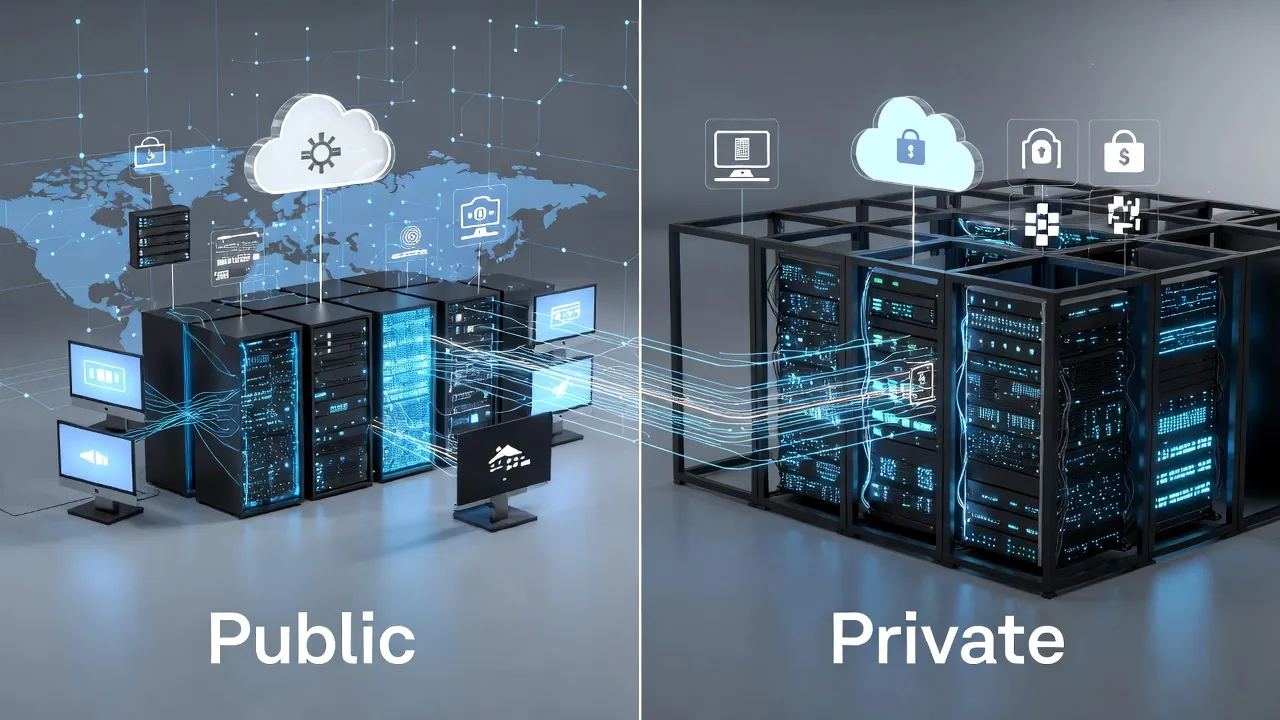



👋Welcome! I’m your AI assistant.
Need help? Just type your message and I’ll assist you or ask to be connected with a human agent.
Ask me or select an option:
Cloud Zion uses the information you provide to us to contact you about our relevant content, products, and services. Check out our privacy policy here.


